
.svg)
.svg)
Why you quit linkedin after three weeks (it's not what you think)


You started strong. Week one, you drafted three LinkedIn posts in ChatGPT, scheduled them in Buffer, tracked ideas in a spreadsheet. Week two, you did it again. Week three, you skipped Tuesday because the 30-minute workflow felt like too much. By week four, you'd stopped entirely.
The problem isn't motivation. It's system design. LinkedIn success doesn't come from viral posts or perfect content. It comes from showing up consistently long enough for the algorithm to categorize you. But the ChatGPT + Buffer + spreadsheet workflow makes consistency architecturally impossible for busy operators.
You're already ahead of 97% of LinkedIn
Only 3% of LinkedIn's 1.2 billion members post content regularly, according to Brenton Way's 2026 research. The opportunity isn't in finding a unique voice or going viral. It's in building a workflow that survives busy weeks.
Most founders assume the barrier is ideas or writing skill. The real barrier is operational overhead. When each post means opening three tools, reformatting content twice, and tracking status across platforms, it feels like a second job.
For teams scaling LinkedIn thought leadership, platforms like Ingage cut engagement work with campaign automation. This turns consistency from a discipline issue into an architectural advantage.nsistency, not virality
LinkedIn’s 360Brew algorithm needs about 90 days of consistent posting. This helps it categorize you and improve how it shares your posts (Botdog 2026). That categorization window is how the platform learns what you write about, who should see it, and how to amplify your reach.
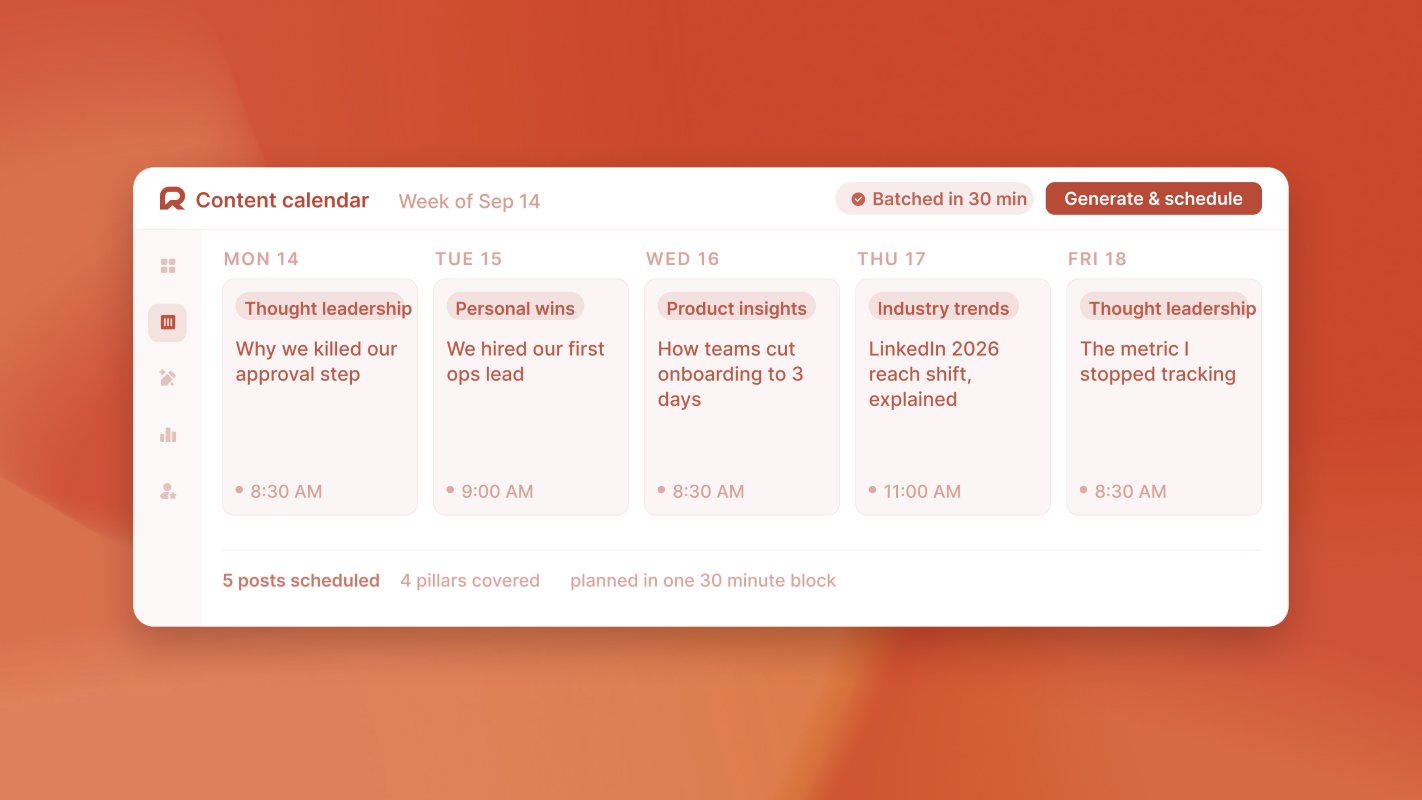
SpeakrBrand's 2025 analysis confirms that posting 1-2 times daily leads to compounding growth in 2025-2026. The algorithm doesn't reward one-hit wonders. It rewards consistent expertise signals over time.
The 3% who post regularly build compounding authority while everyone else chases viral moments. You can't reach day 90 if your workflow makes day 7 unsustainable.
The fragmented workflow creates 30 minutes of friction
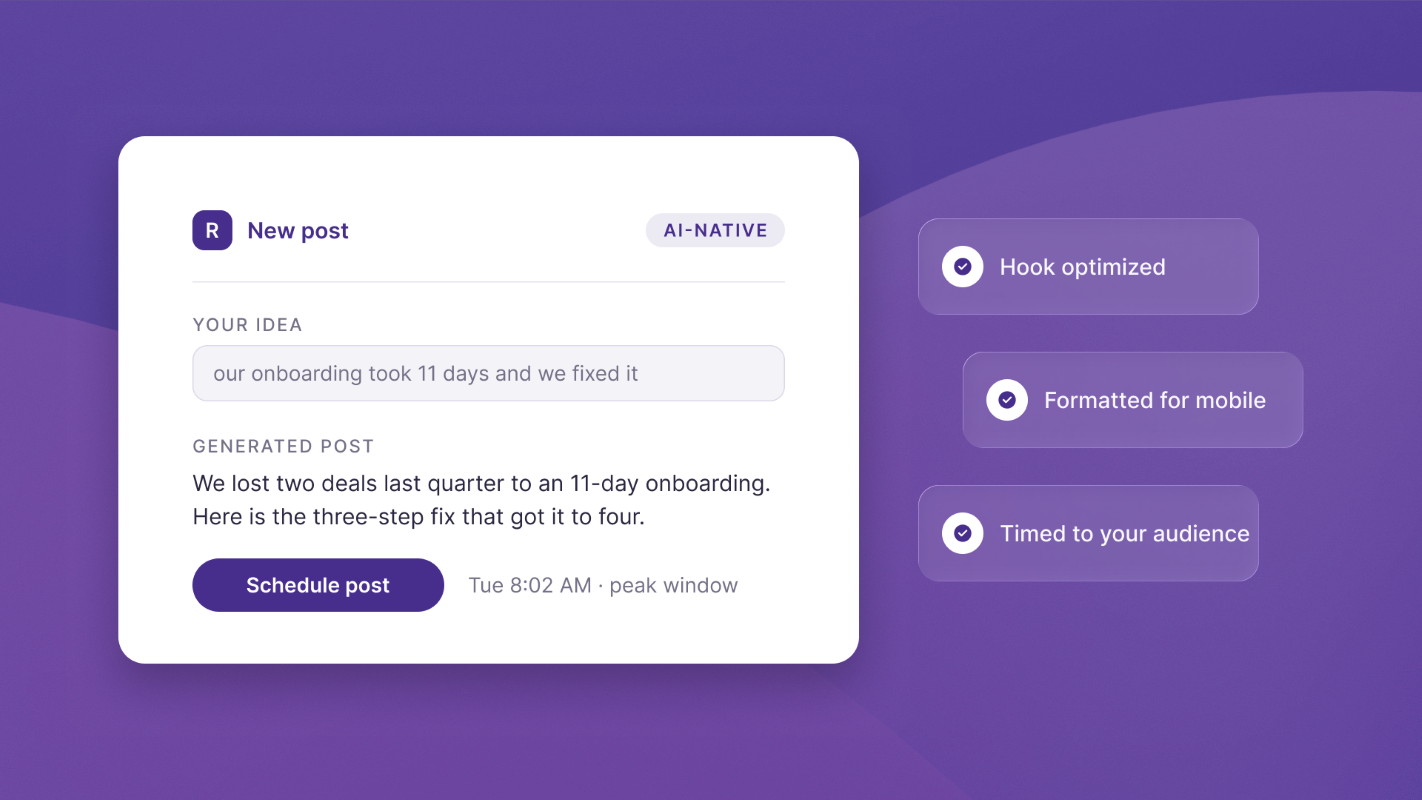
The individual tools work fine. ChatGPT drafts well. Buffer schedules reliably. Spreadsheets track ideas. The problem is the integration tax: switching between tools, reformatting content, tracking what's scheduled where.
Where the time goes
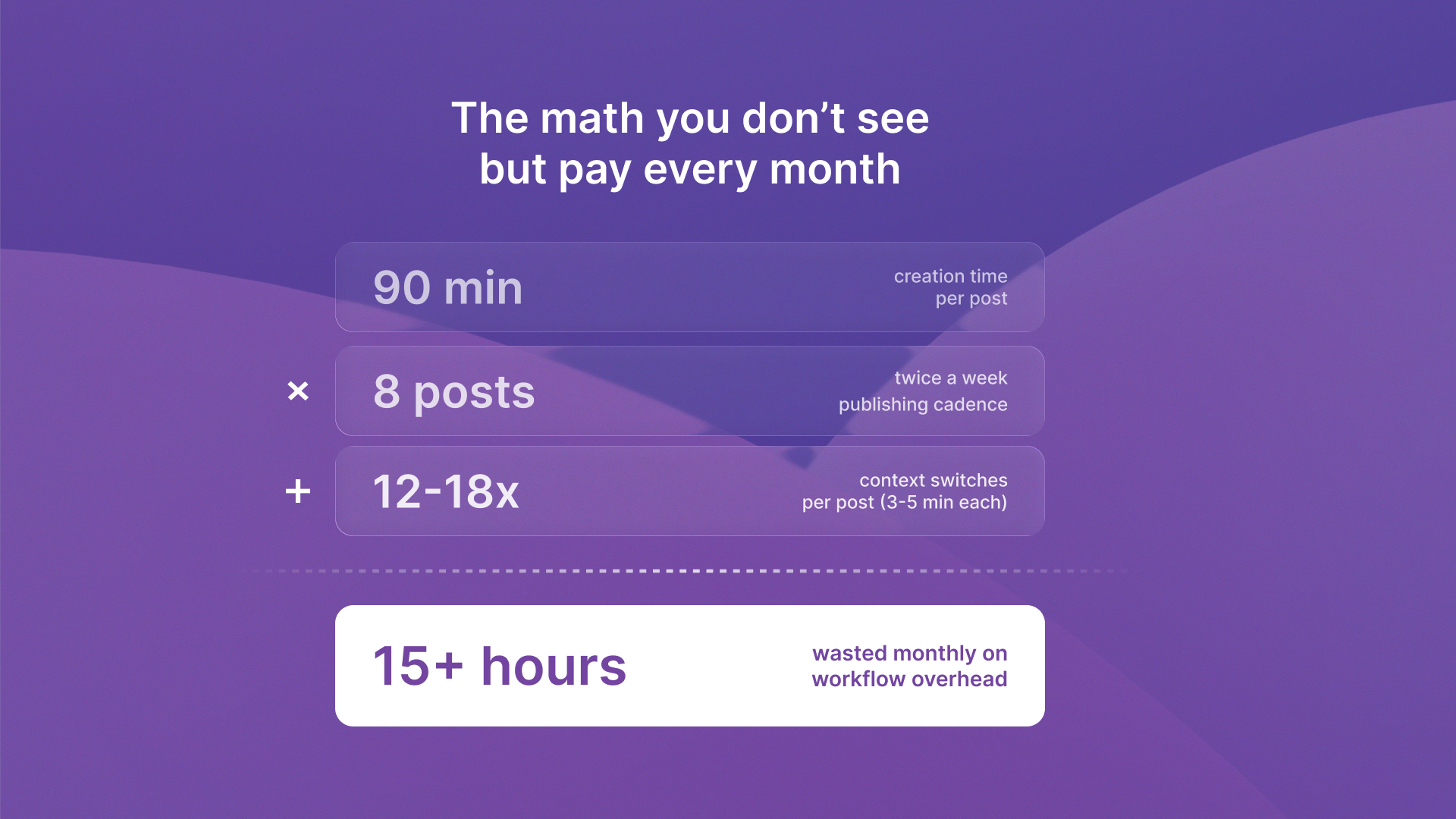
A 15-minute writing task becomes a 45-minute operational project:
- Draft in ChatGPT: 10 minutes
- Copy-paste and reformat for LinkedIn's character limits: 5 minutes
- Switch to Buffer, paste again, adjust formatting: 5 minutes
- Set schedule, verify time zones: 3 minutes
- Update tracking spreadsheet with topic, date, status: 4 minutes
- Context-switch back to actual work: 3 minutes of mental overhead
Behavior design research shows friction kills habits faster than motivation. When each post requires this much context-switching, consistency becomes a discipline exercise instead of a sustainable practice. You're not failing at LinkedIn. Your workflow is failing you.
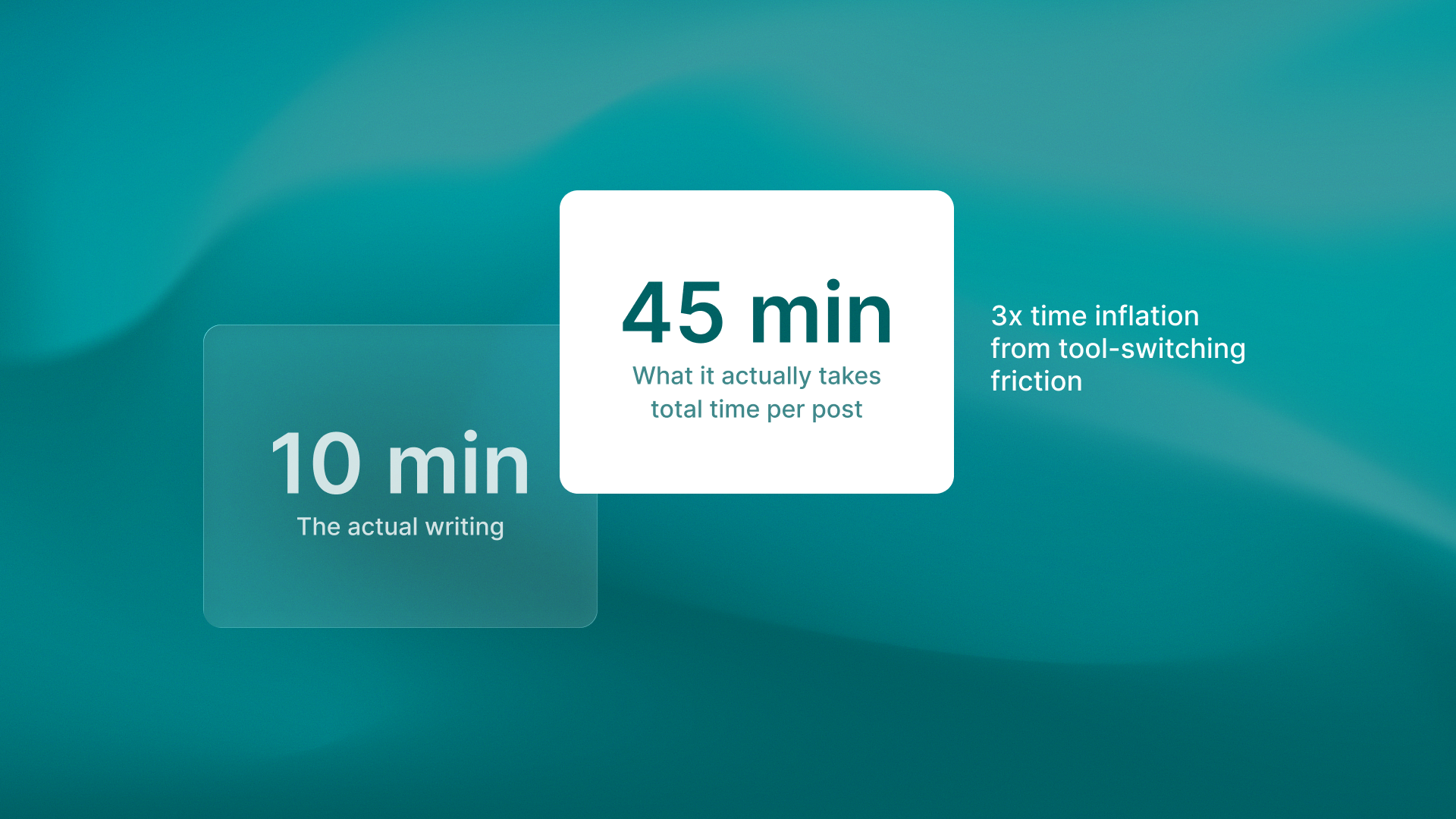
Tracking where consistency breaks down
Most founders underestimate context-switching costs by 40-50% until they see the actual data. If you manage content operations across many channels, tools like Timecapsule can track workflow time. This helps you find where friction builds up.
The time tracking reveals patterns: Tuesday mornings turn into 90-minute content blocks instead of 30-minute sessions. The cognitive residue from tool-switching reduces deep work capacity for the rest of the morning. The workflow itself becomes the biggest barrier to consistency.
What consistent creators do differently
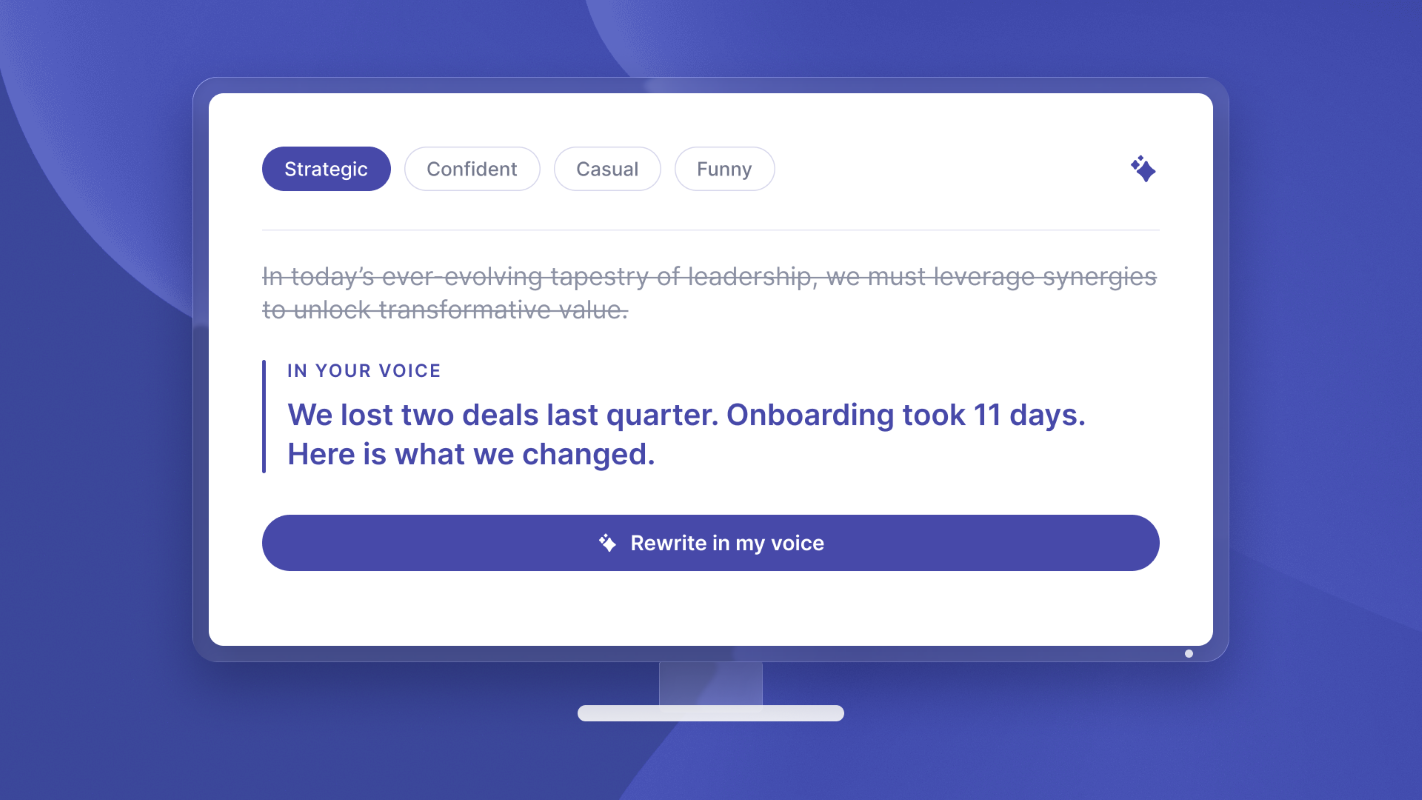
The 3% who post regularly aren't more disciplined. They've solved the system problem. They've eliminated the context-switching, the reformatting, the manual tracking. Their workflow removes friction instead of creating it.
Working with specialists who understand content strategy can help you build consistent systems. Using growth marketing platforms can also make consistency feel inevitable, not heroic.
The algorithm is waiting. It takes 90 days to categorize you. The question is whether your workflow can survive that long.
What to do next:
- Track your actual time per post this week, including all context-switching
- Identify the single biggest friction point in your current workflow
- Test one integration or automation that eliminates that specific friction



.png)


%2520(14).png)
.png)
%2520(13).png)